
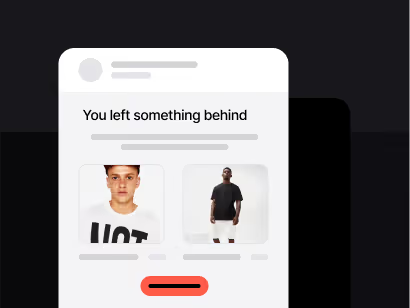
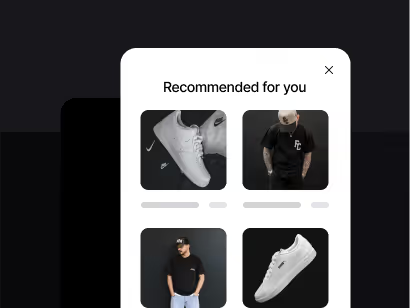
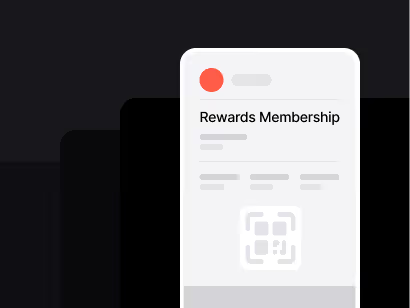

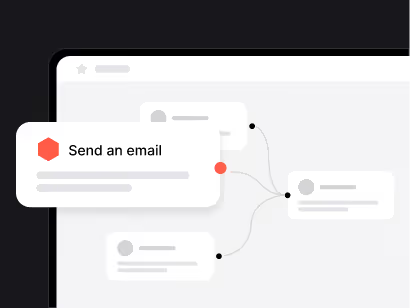



Lanza automatizaciones en minutos
Plantillas predefinidas y casos de uso listos para usar para email, SMS y WhatsApp. Empieza simple, escala cuando estés listo.







No pudimos encontrar ningún elemento que coincida con tus filtros actuales. Prueba a ajustar los criterios o a borrar todos los filtros.
Marketing
Marketing
Ventas
Producto
Soporte


Diseña y lanza campañas multicanal.
Crea campañas de email, SMS y push que trabajen juntas.

Automatiza flujos de trabajo para ahorrar tiempo.
Configura automatizaciones inteligentes y deja que se encarguen del trabajo repetitivo.

Personaliza los recorridos de cliente.
Ofrece experiencias a medida basadas en el comportamiento y las preferencias.

Accede a datos y analíticas fiables.
Toma mejores decisiones con insights claros e informes accionables.
Puntúa leads para priorizar las mejores oportunidades.
Concentra tu energía en los prospectos con mayor probabilidad de conversión.
Automatiza el lead nurturing para centrarte en las oportunidades más calientes.
Mantén a los leads interesados con secuencias automatizadas que parecen personales.
Alinéate con marketing para convertir leads cualificados.
Trabaja con los mismos datos para que ninguna oportunidad se escape.
Predice ingresos y acorta los ciclos de venta.
Obtén una visión clara de tu pipeline y cierra acuerdos más rápido.
Analiza el comportamiento de los usuarios para mejorar el engagement.
Descubre exactamente dónde y por qué los usuarios abandonan.
Guía el onboarding para mejorar las tasas de adopción.
Crea flujos in-app que ayuden a los nuevos usuarios a encontrar valor más rápido.
Identifica riesgos de churn para actuar a tiempo.
Detecta usuarios desconectados a tiempo y activa la respuesta adecuada.
Recoge feedback para tomar mejores decisiones de producto.
Lanza encuestas y recoge insights directamente de tus usuarios.
Centraliza las comunicaciones con clientes para responder más rápido.
Reúne todas las conversaciones en un espacio compartido — se acabaron los mensajes perdidos.
Automatiza las actualizaciones para mantener a los clientes informados.
Envía actualizaciones oportunas y relevantes sin esfuerzo manual.
Personaliza las respuestas para construir relaciones más sólidas.
Usa los datos de cliente para responder con contexto, no solo con respuestas.
Mide la satisfacción para mejorar la calidad del servicio.
Monitoriza el CSAT y los tiempos de respuesta para que tu equipo se mantenga al máximo.
Del caso de uso a tu propia automatización
Ya has visto lo que es posible. Ahora te toca construir tu automatización, sin complicaciones. Conecta tus canales, configura tu primer workflow y empieza a enviar el mensaje adecuado en el momento adecuado. Sin necesidad de saber programar.

Preguntas frecuentes
¿Para qué sirve la biblioteca de automatizaciones listas para usar?
Construir un workflow de marketing automation completo desde cero puede ser un verdadero desafío: averiguar qué datos necesitas para activar tus disparadores, diseñar cada paso, añadir protecciones, ajustar el timing… Lo facilitamos dándote automatizaciones listas para usar que puedes emplear de inmediato.
¿Puedo usar estos workflows sin conocimientos técnicos?
Sí. Cada automatización está diseñada para lanzarse en unos pocos clics dentro de la plataforma. Sin código.
¿Funcionan las automatizaciones para cada sector?
Sí. Cada automatización se adapta a tu sector y a tus objetivos. Ya sea conversión, retención, reactivación o upsell.
¿Puedo personalizar un caso de uso existente para mi negocio?
Por supuesto. Cada workflow es un punto de partida. Puedes editar los disparadores, los canales (email, SMS, push) y las condiciones para adaptarlos a tu audiencia y tus datos.