





À propos de Centrum Medyczne CMP
Centrum Medyczne CMP est un prestataire de santé qui accompagne ses patients selon plusieurs modèles simultanément : soins primaires (POZ), consultations privées (FFS) et forfaits médicaux. Les parcours patients sont longs et multi-étapes, et dépendent largement de facteurs externes — comme la connexion via des services gouvernementaux ou bancaires en ligne — ce qui différencie significativement ce modèle du commerce électronique classique.
Les principaux défis
Avant l'implémentation de Positive User, la communication reposait principalement sur des campagnes email et des activités informatives de base. Malgré l'accès à un grand volume de données patients, l'équipe manquait d'outils pour les exploiter efficacement. Les principaux défis incluaient :
- Absence de structure de données cohérente entre les systèmes
- Impossibilité de suivre les parcours patients complets et de mesurer les conversions
- Processus hautement complexes ne pouvant être gérés avec des scénarios d'automatisation standard
- Besoin d'une implémentation itérative et progressive compte tenu du volume des opérations
Pourquoi Positive User
Positive User a été sélectionné comme une plateforme permettant le développement progressif de la marketing automation, offrant de la flexibilité dans le travail avec les données, et fournissant un vrai soutien d'équipe tout au long de l'implémentation et au-delà.
{{QUOTE-TESTI-1}}
Comment Positive User aide
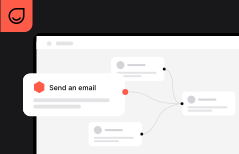
L'implémentation a débuté par la communication email, s'est étendue aux campagnes SMS et se trouve actuellement dans la phase finale de déploiement des notifications push. L'ensemble de la communication avec les patients est désormais cohérent, contrôlé et géré dans un environnement unique.
Organisation des données patients & cartographie du parcours
Positive User a permis de cartographier précisément les parcours complets des patients sur une timeline et d'analyser les données via API. En s'appuyant sur le processus d'inscription aux soins primaires — qui comprend cinq étapes — l'équipe a pu identifier les véritables obstacles à la conversion, séparer les problèmes opérationnels des étapes hors de contrôle de l'organisation, et mettre en place des mécanismes de récupération pour les patients aux étapes critiques.
Base de données de communication — source unique de vérité
Un élément clé du projet a été la création d'une base de données de communication centrale regroupant toutes les informations sur les messages envoyés aux patients. Auparavant, les activités étaient dispersées sur plusieurs systèmes, ce qui entraînait des données fragmentées et une visibilité limitée pour les équipes en première ligne.
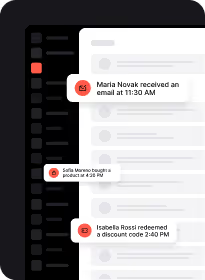
Aujourd'hui, Positive User est la source unique de vérité. Grâce à l'intégration API avec le système interne, l'équipe dispose d'une vue en temps réel de tous les messages envoyés (email, SMS, notifications push) dans une interface dédiée aux collaborateurs.
Support dédié Customer Success
L'implémentation a été réalisée avec le soutien continu d'un Customer Success Manager dédié, qui a coordonné le déploiement et continue d'appuyer l'optimisation en cours. La collaboration repose sur une communication directe et une réactivité rapide aux besoins évolutifs.
Objectifs et résultats
Les premiers scénarios implémentés ont déjà confirmé un impact direct sur les résultats commerciaux :
- Taux de délivrabilité email : 98,5 %
- Taux d'ouverture : 35 %
- CTR : 2,7 %
- Taux de désabonnement : 0,3 %
- Les campagnes SMS ont généré des dizaines de conversions avec un ROI très élevé — le coût de la campagne ne représentait que quelques points de pourcentage des revenus générés
- Sur une base annuelle, la plateforme s'est autofinancée — incluant les coûts de plateforme, les coûts SMS et la charge de travail de l'équipe
{{QUOTE-TESTI-2}}
{{QUOTE-TESTI-1}}